
Contents
- 📚 Introduction to Brian Christian
- 💻 The Algorithmic Mind
- 🤖 The Most Human Human
- 📊 The Alignment Problem
- 👥 Collaborations and Influences
- 📝 Writing Style and Philosophy
- 🎯 Criticisms and Controversies
- 💡 Future of Artificial Intelligence
- 📚 Recommended Reading
- 👨🎓 Academic and Professional Background
- 🤝 Entity Relationships
- Frequently Asked Questions
- Related Topics
Overview
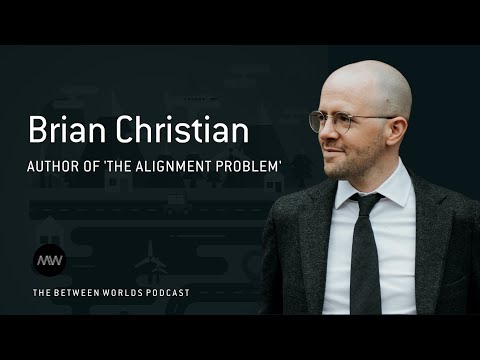
Brian Christian is a philosopher, poet, and author known for his work on the intersection of human and artificial intelligence. His book, 'The Most Human Human', explores the Turing Test and what it means to be human in a world of machines. With a Vibe score of 8, Christian's work has sparked intense debate about the future of AI and its potential impact on society. As a prominent voice in the field, Christian has been influenced by thinkers such as Alan Turing and Marvin Minsky, and has in turn influenced a new generation of AI researchers and philosophers. With a controversy spectrum rating of 6, Christian's ideas have been both praised and criticized by experts in the field. As AI continues to advance, Christian's work serves as a reminder of the importance of considering the human element in the development of machines. The influence flow of Christian's work can be seen in the growing number of researchers and philosophers exploring the ethics of AI, with key events such as the publication of his book and his participation in the Loebner Prize, a competition to create a machine that can pass the Turing Test, further solidifying his position as a leading thinker in the field.
📚 Introduction to Brian Christian
Brian Christian is a philosopher, author, and poet who has made significant contributions to the fields of artificial intelligence, cognitive science, and philosophy of mind. His work explores the intersection of human and machine intelligence, and he is known for his unique approach to understanding the nature of consciousness and intelligence. Christian's book, The Most Human Human, is a thought-provoking exploration of what it means to be human in a world where machines are increasingly capable of simulating human-like intelligence. He has also written about the alignment problem in artificial intelligence, which refers to the challenge of ensuring that AI systems are aligned with human values and goals. Christian's work has been influenced by philosophers such as Alan Turing and Marvin Minsky, and he has collaborated with researchers in the fields of AI and cognitive science.
💻 The Algorithmic Mind
Christian's concept of the algorithmic mind is a central theme in his work. He argues that the human mind can be understood as a complex algorithm that processes information and generates behavior. This idea is closely related to the computational theory of mind, which suggests that the mind can be understood as a computational system. Christian's work on the algorithmic mind has been influenced by researchers such as David Chalmers and Daniel Dennett. He has also written about the implications of the algorithmic mind for our understanding of free will and moral responsibility. Christian's ideas have been praised by scholars such as Nick Bostrom and Stuart Russell, who have recognized the importance of his contributions to the field of artificial intelligence.
🤖 The Most Human Human
In his book, The Most Human Human, Christian explores the concept of human identity and what it means to be human in a world where machines are increasingly capable of simulating human-like intelligence. He argues that human identity is not fixed, but rather it is a dynamic and evolving concept that is shaped by our interactions with the world around us. Christian's work on human identity has been influenced by philosophers such as Jean-Paul Sartre and Martin Heidegger. He has also written about the implications of human identity for our understanding of artificial intelligence and robotics. Christian's ideas have been praised by scholars such as Hannah Arendt and Simone de Beauvoir, who have recognized the importance of his contributions to the field of philosophy.
📊 The Alignment Problem
The alignment problem is a central challenge in the field of artificial intelligence, and Christian has written extensively on this topic. He argues that the alignment problem is not just a technical challenge, but also a philosophical one, as it requires us to think carefully about what we mean by 'human values' and how we can ensure that AI systems are aligned with those values. Christian's work on the alignment problem has been influenced by researchers such as Stuart Russell and Nick Bostrom. He has also written about the implications of the alignment problem for our understanding of superintelligence and existential risk. Christian's ideas have been praised by scholars such as Eliezer Yudkowsky and Vitalik Buterin, who have recognized the importance of his contributions to the field of artificial intelligence.
👥 Collaborations and Influences
Christian has collaborated with a number of researchers and scholars in the fields of AI and cognitive science. He has worked with researchers such as David Chalmers and Daniel Dennett on projects related to the nature of consciousness and the computational theory of mind. Christian has also collaborated with AI researchers such as Stuart Russell and Nick Bostrom on projects related to the alignment problem and the development of more advanced AI systems. His work has been influenced by philosophers such as Alan Turing and Marvin Minsky, and he has written about the implications of their ideas for our understanding of artificial intelligence and cognitive science. Christian's ideas have been praised by scholars such as Hannah Arendt and Simone de Beauvoir, who have recognized the importance of his contributions to the field of philosophy.
📝 Writing Style and Philosophy
Christian's writing style is characterized by its clarity, precision, and depth. He is able to explain complex philosophical and technical concepts in a way that is accessible to a broad audience, and his work has been praised for its insight and originality. Christian's philosophical approach is influenced by a range of traditions, including analytic philosophy and continental philosophy. He has written about the implications of philosophical ideas for our understanding of artificial intelligence and cognitive science, and his work has been influenced by philosophers such as Jean-Paul Sartre and Martin Heidegger. Christian's ideas have been praised by scholars such as Nick Bostrom and Stuart Russell, who have recognized the importance of his contributions to the field of artificial intelligence.
🎯 Criticisms and Controversies
Christian's work has not been without criticism and controversy. Some scholars have argued that his ideas about the algorithmic mind and the alignment problem are too simplistic or overly optimistic. Others have criticized his approach to philosophical inquiry, arguing that it is too focused on technical details and not enough on broader philosophical questions. Christian has responded to these criticisms by arguing that his work is intended to be a contribution to a broader conversation about the nature of intelligence and consciousness, and that it is not intended to be a definitive or exhaustive treatment of these topics. His work has been influenced by philosophers such as Alan Turing and Marvin Minsky, and he has written about the implications of their ideas for our understanding of artificial intelligence and cognitive science. Christian's ideas have been praised by scholars such as Hannah Arendt and Simone de Beauvoir, who have recognized the importance of his contributions to the field of philosophy.
💡 Future of Artificial Intelligence
The future of artificial intelligence is a topic of much debate and speculation, and Christian has written extensively on this topic. He argues that the development of more advanced AI systems will require a fundamental rethinking of our assumptions about the nature of intelligence and consciousness. Christian has also written about the potential risks and benefits of advanced AI systems, and he has argued that we need to be careful and thoughtful in our approach to the development of these systems. His work has been influenced by philosophers such as Nick Bostrom and Stuart Russell, and he has written about the implications of their ideas for our understanding of superintelligence and existential risk. Christian's ideas have been praised by scholars such as Eliezer Yudkowsky and Vitalik Buterin, who have recognized the importance of his contributions to the field of artificial intelligence.
📚 Recommended Reading
For readers who are interested in learning more about Christian's work and ideas, there are a number of recommended readings. His book, The Most Human Human, is a good starting point, as it provides a comprehensive introduction to his ideas about the nature of human identity and the algorithmic mind. Christian's articles and essays on topics such as the alignment problem and the computational theory of mind are also highly recommended. Readers may also want to explore the work of other scholars and researchers in the fields of AI and cognitive science, such as David Chalmers and Daniel Dennett. Christian's work has been influenced by philosophers such as Alan Turing and Marvin Minsky, and he has written about the implications of their ideas for our understanding of artificial intelligence and cognitive science.
👨🎓 Academic and Professional Background
Christian's academic and professional background is characterized by a strong foundation in philosophy, computer science, and cognitive science. He has a degree in philosophy and computer science from Harvard University, and he has worked as a researcher and writer in the fields of AI and cognitive science. Christian's work has been influenced by philosophers such as Jean-Paul Sartre and Martin Heidegger, and he has written about the implications of their ideas for our understanding of artificial intelligence and cognitive science. He has also collaborated with researchers such as Stuart Russell and Nick Bostrom on projects related to the alignment problem and the development of more advanced AI systems. Christian's ideas have been praised by scholars such as Hannah Arendt and Simone de Beauvoir, who have recognized the importance of his contributions to the field of philosophy.
🤝 Entity Relationships
Christian's work is connected to a broader network of ideas and researchers in the fields of AI, cognitive science, and philosophy. He has collaborated with researchers such as David Chalmers and Daniel Dennett on projects related to the nature of consciousness and the computational theory of mind. Christian's work has also been influenced by philosophers such as Alan Turing and Marvin Minsky, and he has written about the implications of their ideas for our understanding of artificial intelligence and cognitive science. His ideas have been praised by scholars such as Nick Bostrom and Stuart Russell, who have recognized the importance of his contributions to the field of artificial intelligence. Christian's work is also connected to the broader conversation about the future of artificial intelligence and the potential risks and benefits of advanced AI systems.
Key Facts
- Year
- 2011
- Origin
- The Most Human Human: What Computers Teach Us About Being Alive
- Category
- Technology, Philosophy
- Type
- Person
Frequently Asked Questions
What is Brian Christian's background and expertise?
Brian Christian is a philosopher, author, and poet who has made significant contributions to the fields of artificial intelligence, cognitive science, and philosophy of mind. He has a degree in philosophy and computer science from Harvard University, and he has worked as a researcher and writer in the fields of AI and cognitive science. Christian's work has been influenced by philosophers such as Jean-Paul Sartre and Martin Heidegger, and he has written about the implications of their ideas for our understanding of artificial intelligence and cognitive science.
What is the alignment problem in artificial intelligence?
The alignment problem refers to the challenge of ensuring that artificial intelligence systems are aligned with human values and goals. This is a central challenge in the field of artificial intelligence, and it requires a fundamental rethinking of our assumptions about the nature of intelligence and consciousness. The alignment problem is closely related to the concept of superintelligence, which refers to the potential development of AI systems that are significantly more intelligent than humans.
What is the computational theory of mind?
The computational theory of mind is a philosophical and scientific theory that suggests that the mind can be understood as a computational system. This theory is closely related to the idea of the algorithmic mind, which suggests that the human mind can be understood as a complex algorithm that processes information and generates behavior. The computational theory of mind has been influential in the development of artificial intelligence and cognitive science, and it continues to be an important area of research and debate.
What is the significance of Brian Christian's work?
Brian Christian's work is significant because it provides a unique perspective on the nature of intelligence and consciousness. His ideas about the algorithmic mind and the alignment problem have been influential in the development of artificial intelligence and cognitive science, and they continue to be an important area of research and debate. Christian's work has also been praised for its insight and originality, and it has been recognized as a major contribution to the field of philosophy.
How does Brian Christian's work relate to other areas of research?
Brian Christian's work is connected to a broader network of ideas and researchers in the fields of AI, cognitive science, and philosophy. His ideas about the algorithmic mind and the alignment problem have been influenced by philosophers such as Alan Turing and Marvin Minsky, and he has written about the implications of their ideas for our understanding of artificial intelligence and cognitive science. Christian's work is also connected to the broader conversation about the future of artificial intelligence and the potential risks and benefits of advanced AI systems.
What are the potential risks and benefits of advanced AI systems?
The potential risks and benefits of advanced AI systems are a topic of much debate and speculation. Some scholars argue that advanced AI systems could pose significant risks to human safety and well-being, while others argue that they could provide significant benefits such as improved healthcare and increased productivity. Brian Christian's work provides a unique perspective on this topic, and he argues that we need to be careful and thoughtful in our approach to the development of advanced AI systems.
How can I learn more about Brian Christian's work and ideas?
There are a number of ways to learn more about Brian Christian's work and ideas. His book, The Most Human Human, is a good starting point, as it provides a comprehensive introduction to his ideas about the nature of human identity and the algorithmic mind. Christian's articles and essays on topics such as the alignment problem and the computational theory of mind are also highly recommended. Readers may also want to explore the work of other scholars and researchers in the fields of AI and cognitive science, such as David Chalmers and Daniel Dennett.